

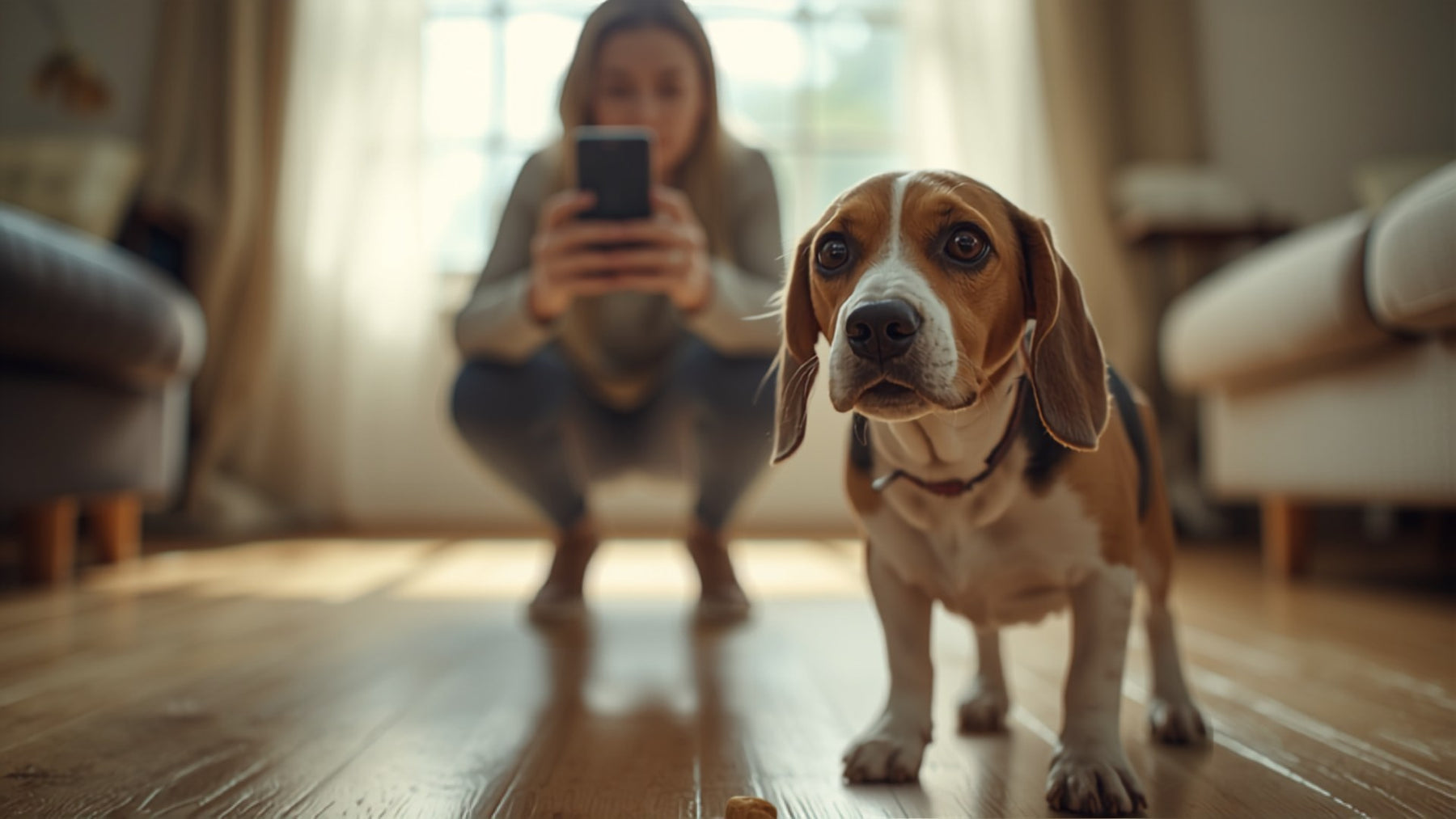
You know the feeling: 400 photos of your dog on your phone, and none shows who they really are. Half-closed eyes, a tail already out of the frame, a gaze directed anywhere except at you. And the one photo you love is blurred.
The camera is almost never the problem. Light, perspective and patience make the difference, and all three are free. Here are the ten things that matter. You only need your phone, a window and some treats.
1. Get down to eye level
The most common mistake is photographing from above. That is how you see a dog when standing beside them. A portrait, though, wants to meet their eyes. Kneel down or lie on the floor if necessary. The moment the camera reaches your dog’s eye level, a snapshot becomes a picture with a connection.
2. Daylight beats everything
No flash. Ever. Flash creates red or green eyes, flat-looking fur and harsh shadows. The best light comes from a large window on a cloudy day or beneath a shady tree in the afternoon. Position yourself so the light comes from the side or front, rather than behind. Backlighting looks lovely on Instagram, but leaves the eyes too dark for a portrait.
3. The eyes must be sharp
Everything else can be soft, but not the eyes. Tap the screen right on the eye closest to you and hold until the focus locks. On modern phones, that is enough. If your dog moves a lot, use burst mode and pick the best shot later. How you start it depends on your phone: on iPhone 11 and newer, you slide the shutter button to the left and hold it. On Android phones, you will find the gesture in the camera settings or your model's manual.
4. Clear the background clutter
The drying rack, the bins, the sofa with the stain. They stand out more in a photo than in real life. Find a quiet background: a wall, a field or a fence. Or use your phone’s portrait mode to blur the background. For one of our portraits, the background does not matter because we replace it. But a quiet background helps the camera focus.
5. Catch the ears to catch the gaze
Want your dog to look into the camera, ears up and with an alert expression? Then make a sound they don't know. A squeak, a rustle, a soft whistle. Right next to the camera, and only once you are ready to shoot: focus locked, finger on the shutter. The effect usually only lasts a moment. Use them. With every repetition the sound usually works a little less, so save it for the moment you press the shutter.
6. Hold a treat above the lens
Hold a treat directly above the phone camera, rather than beside it. Your dog then looks straight into the lens, giving the portrait that direct, affecting gaze. Remember to reward them, or next time they will only watch your hand.
7. Get closer, but do not zoom
Your phone’s digital zoom discards detail, precisely the details that make a portrait: coat texture, whiskers and the shine in the eyes. Take a step closer instead. As a rule of thumb, the head and chest should fill at least a third of the picture.
8. Let them use some energy first
After a walk, a dog sits more calmly, holds their gaze longer and pants less. Ten minutes after the walk, once they are settling but not yet asleep, is the best moment. With puppies, try just after eating, before sleep.
9. Take plenty, delete later
Professionals take a hundred pictures to get one. You can too. Take 30 photos in two minutes, then pause and have a cuddle. Choose later at your leisure. Look for three things: are the eyes sharp? Is the whole head in the frame? Does your dog look relaxed or stressed? Ears pinned back and a wide-open mouth indicate tension rather than happiness.
10. The photo that moves you is the right one
In the end, technique matters less than feeling. A technically average photo with the right expression beats a perfectly exposed one without it. The tilted head. That one floppy ear. The look only you know. If a photo makes you smile, it is the right one.

And if the photo is not perfect?
Send it anyway. We will tell you honestly whether it is suitable. Camera shake is difficult, darkness is usually solvable and a busy background is no problem at all. When you order, you already see your design in the live preview; if you have a special request, you get a personal preview by e-mail before printing.
What you need for a portrait, in one sentence: daylight, eye level, a sharp face. We take care of the rest. You choose the material that ends up on the wall: our dog portraits range from acrylic glass to canvas, wooden frames and simple posters. For why an ordinary phone photo is enough and what sizes and formats cost, read Give a dog portrait as a gift: a phone photo is enough.
Many of the loveliest dog photos happen in the first few weeks. If a puppy has just joined your home, our free Puppy Starter Pack helps you through this stage.
Further reading
- Give a pet portrait as a gift: what a good photo can become
- Photographing your cat without stress: the same idea, with a cat
- Photographing horses: and at the yard
- Give a dog portrait as a gift: why a phone photo is enough


