

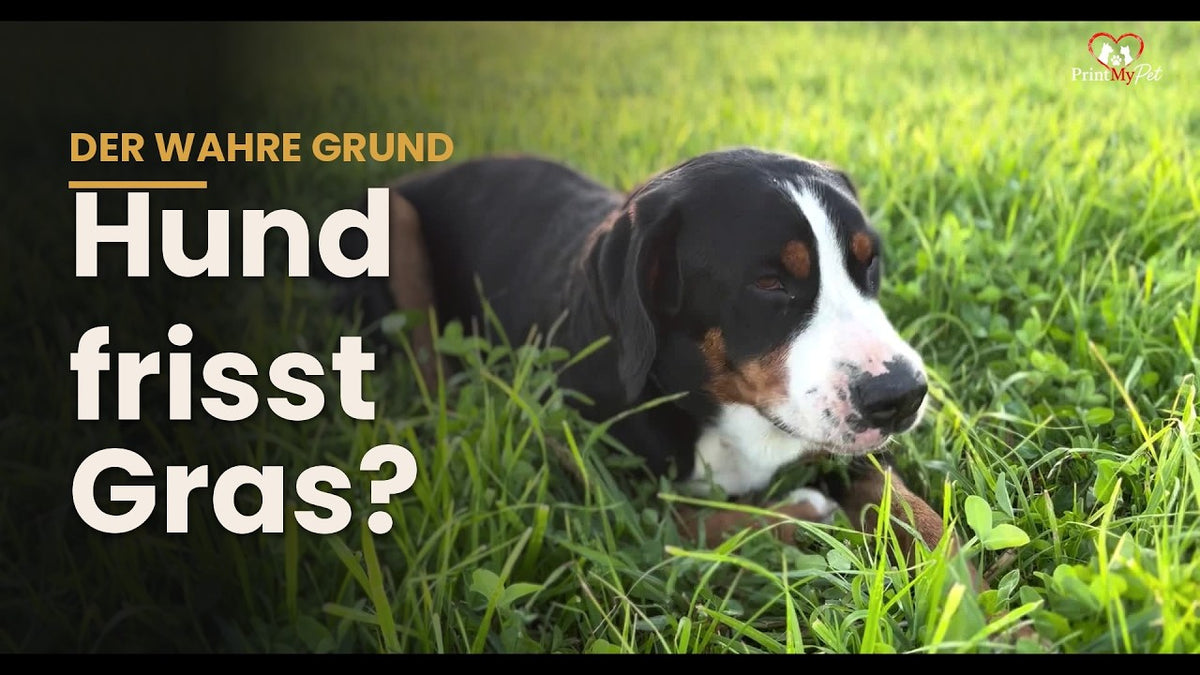
Eating grass is usually normal behaviour for dogs and not a sign that they feel sick. In a University of California, Davis survey of 1.571 dog owners, 79 percent of dogs with access to plants ate grass, but only 9 percent regularly seemed ill beforehand, and only 22 percent regularly vomited afterwards.
Video on this topic: Dog eating grass? Usually there is a different reason (8 minutes, YouTube)
Why does my dog eat grass?
The familiar explanation is that a dog has a stomach ache and eats grass to vomit. The figures suggest otherwise. In the study by Sueda, Hart and Cliff (2008), the vast majority of grass-eating dogs were neither ill beforehand nor vomited afterwards. The vets at VCA summarise it like this: most dogs that eat grass are not ill beforehand and do not vomit afterwards.
What might be behind it instead:
- An ancient inheritance: Wolves eat grass too. According to VCA, depending on the study, it occurs in 11 to 47 percent of wolf faecal samples. The Davis researchers therefore consider grass eating an inherited behaviour.
- Boredom and restlessness: VCA describes how some dogs eat more grass when they spend a lot of time alone or are bored, much like people biting their nails.
- Fibre: Grass provides fibre. VCA suggests that some dogs may use it to support their digestion. This has not been proven.
- Young age: In the study, younger dogs ate plants more often than older dogs.
When should you see your vet?
A few blades now and then, followed by a lively dog: that is no cause for concern. It is different if your dog suddenly eats a lot of grass hastily and shows signs of abdominal pain, vomits repeatedly, has diarrhoea, stops eating or seems lethargic. VCA lists possible causes such as heartburn (reflux), inflammatory bowel disease or pancreatitis. In that case, your dog needs to see a vet.
If you suspect poisoning, go to your vet or an emergency veterinary service immediately.
The real risks: pesticides and worms
The grass itself is rarely the problem. What is on it is more dangerous:
- Weedkillers and pesticides on treated areas can be toxic, according to VCA. Do not let your dog graze on freshly treated lawns, field margins or flower beds in parks.
- Intestinal parasites: Grass contaminated with other dogs' faeces can expose your dog to worm eggs, such as hookworm or roundworm eggs. Regular worm prevention in consultation with your vet is therefore particularly useful for grass eaters.
- Other plants: Some dogs eat more than just grass. Many garden and houseplants are poisonous to dogs. You can find out what your dog can and cannot eat in our guide to over 100 foods.
How to stop your dog eating grass
Is it necessary? Not necessarily if your dog occasionally nibbles on untreated grass. If it bothers you or the area is unsafe, VCA recommends a simple swap: take treats with you, interrupt your dog as soon as they lower their head to the grass, redirect them or ask for a simple command, then reward them. Longer walks, search games and food toys that make your dog work for their food can help with boredom.
Also make sure your dog eats enough of the right food. To calculate how much food your dog needs each day, use our feeding calculator .
Frequently asked questions
Why does my dog eat grass? Usually out of habit, curiosity or boredom. In a University of California, Davis study, only 9 percent of grass-eating dogs regularly seemed ill beforehand.
Does my dog eat grass because they feel sick? Usually not. Only 22 percent of the dogs in the study regularly vomited after eating grass. If your dog suddenly eats a lot of grass hastily and vomits repeatedly, have them examined by a vet.
Is eating grass dangerous for dogs? The grass itself rarely is. The risks are weedkillers and pesticides on treated areas, and worm eggs from other dogs' faeces.
Should I stop my dog eating grass? Occasional nibbling on untreated grass is fine. In unsafe areas, distract your dog and reward them for walking on with you instead.
Read more
- What can't dogs eat? A traffic-light guide to over 100 foods
- Can dogs eat chocolate?
- Feeding calculator: how much your dog needs each day
- Free puppy starter pack for the first few weeks
Sources, accessed on 07.11.2026: Sueda, Hart and Cliff (2008), Characterisation of plant eating in dogs, Applied Animal Behaviour Science 111, pp. 120 to 132 (survey of 1.571 dog owners: 79 percent grass, 9 percent ill beforehand, 22 percent vomiting afterwards, younger dogs more often); VCA Animal Hospitals, Why Do Dogs Eat Grass? (Williams, Weir, Buzhardt: wolves 11 to 47 percent, boredom, pesticides, worms, training).
This article does not replace veterinary advice.


