

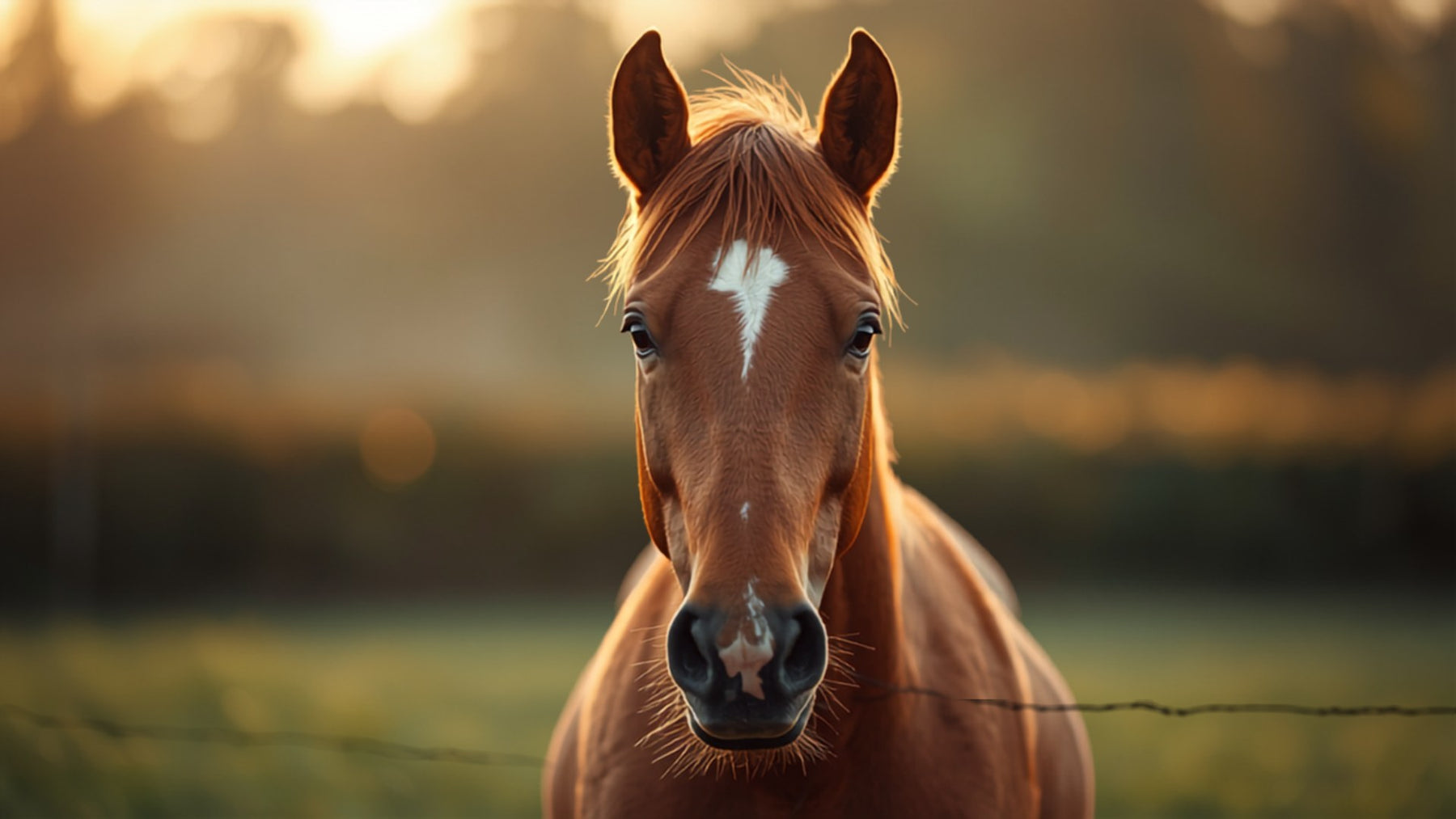
There are a thousand photos of your horse on your phone: grazing, being groomed, half hidden by a fence, ears back or eyes closed. Then there is the picture you really want: ears pricked, an alert expression, a glossy coat and lovely light. The picture that shows your horse as you see them.
That picture is possible. It takes a little planning, a helper and about twenty minutes. Here is how.
1. Timing matters more than the camera
Midday light turns any horse into a silhouette with shadows beneath the belly and bright patches on the back. The first hour after sunrise and the last before sunset are ideal for horse photos: soft light, warm colours and long shadows that define the muscles. If that is not possible, an overcast sky is the next best option. Direct midday sun is not.
2. Groom as if for a show
The camera sees everything: dust on the coat, straw in the mane, sleep in the eyes and uncleaned hooves. Twenty minutes of grooming makes the difference between a snapshot and a photograph. Lay the mane to one side, wipe eyes and nostrils and oil the hooves if you are serious about it. And use a clean headcollar, or none. A green turnout headcollar easily draws attention away from the horse in the picture.
3. A helper makes it much easier
On your own it is hard. It is easier with someone standing behind you to take care of the ears. What works: rustling a plastic bag, showing a treat in your hand, a short whistle, leading another horse past the edge of the frame. What usually helps little: calling its name, because after a few repetitions many horses hardly react any more. Every stimulus wears off quickly, so keep a few different ones ready.
4. Ears forward, eyes towards you
The secret is to place the stimulus just beside the camera, rather than far away. Otherwise, the horse looks out of the picture. Your helper stands directly behind your shoulder. Have your finger on the shutter before the stimulus comes, because the ears often only stay up for a moment.
5. Never straight on from below
A horse photographed from the front and slightly below gains a huge head and tiny hindquarters: the classic beginner’s mistake. For a portrait, shoot from slightly to one side of the front, at chest to shoulder height, with some distance and zoom rather than close up with a wide-angle lens. A phone’s wide-angle lens distorts; a telephoto lens or 2x camera flatters.
6. Position the legs
For a full-body photo, place the two legs nearest the camera slightly apart so all four are visible. It sounds fussy, but a horse with only three visible legs always looks odd in a picture. It does not matter for a head portrait.
7. The background is half the picture
The paddock with the blue barrel, the trailer, the fence growing out of the withers: these are things you notice only in the photo. Find a quiet background such as a hedge, woodland edge or a field stretching into the distance. The greater the distance between horse and background, the softer it becomes. For our portrait, the background does not matter because we redesign it. For the photo itself, it does.
8. Burst mode and patience
Shoot in burst mode and sort through the photos later. On iPhone 11 and newer, you slide the shutter button to the left and hold it; on Android phones, the gesture depends on the model. Horses blink, chew, snort, and the one moment with pricked ears and a calm mouth lies somewhere in between. Expect a hundred photos for three good ones.
9. The photo that can become a portrait
What we need is simpler than many people think: a sharp head, open eyes with light in them, ears forward and light from the side or slightly in front. We can remove a headcollar; a background fence or a mark on the blaze is no problem. What we cannot rescue is blur, backlighting without detail or a steep downward angle that makes the head enormous. If unsure, send two or three photos. We will tell you honestly which is suitable, and you receive a free preview before printing.

A horse's head can take a large format. Once the photo is right, a poster in a wooden frame is the option that does the animal justice. Horse portraits are also available as posters, in a wooden frame and on acrylic glass.
A word about photos with riders
If you want to be in the picture, stand beside the horse rather than in front, rest your hand on the neck rather than the headcollar and ask the helper to watch your eyes too, because both of you blink. The loveliest pictures often happen after the main session, when everyone relaxes and your horse rests their head on your shoulder. That makes keeping the camera going for another five minutes worthwhile.
Still looking for a name for a new horse at the yard? Our horse name finder can help.
For children at the yard who prefer picking up a pencil, find our Horse Colouring Book for Children on the books page (book in German).
Further reading
- What a Haflinger costs per month: the yard’s most rewarding subject
- Taking your own dog photos: the same principles, a smaller animal
- Giving a pet portrait: from photo to portrait


