

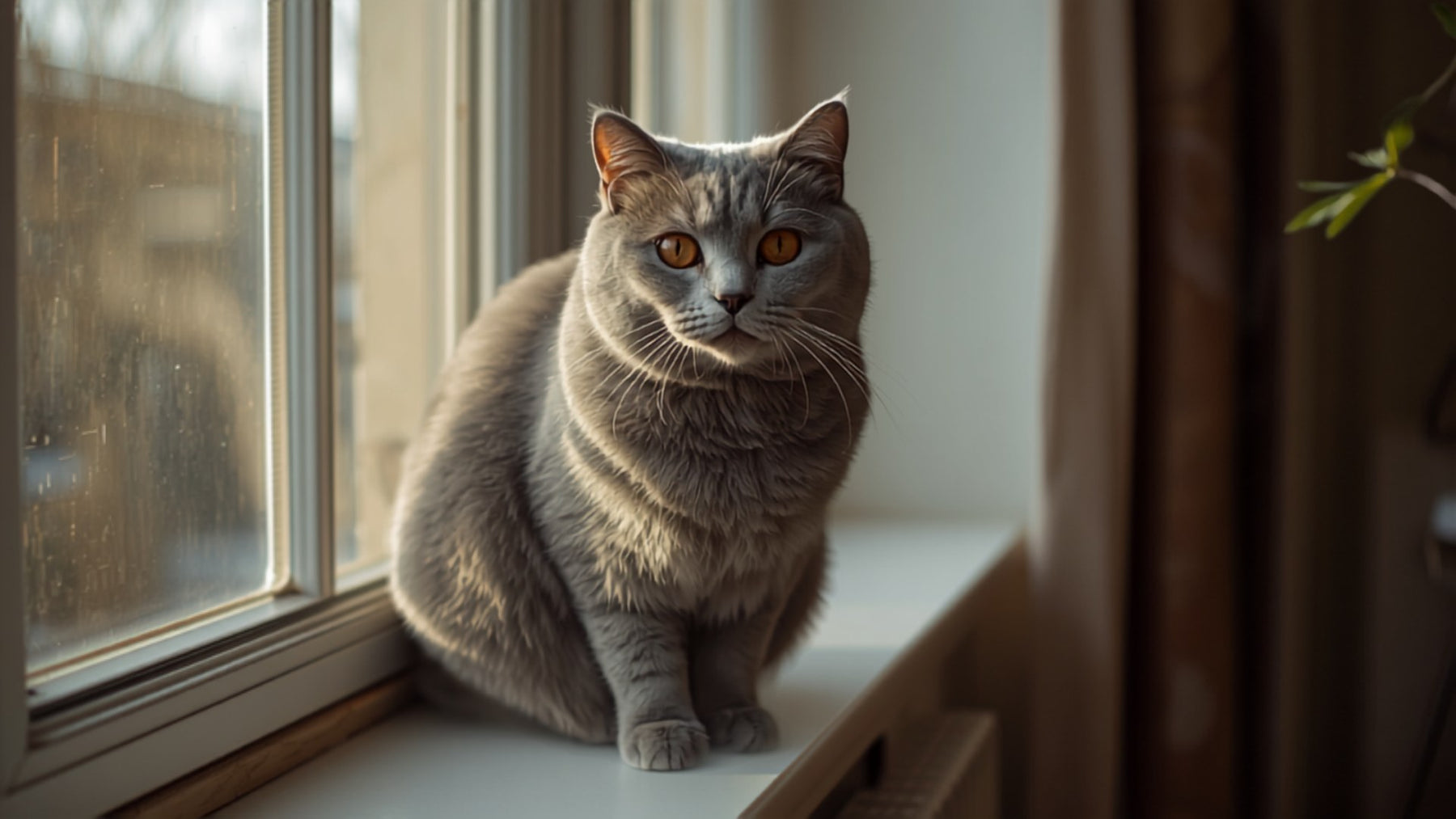
A round head, copper eyes and the expression of a teddy bear with some life experience: the British Shorthair has been one of Germany’s most popular pedigree cats for years, and it is easy to see why. They look made to lounge on a sofa and watch the world calmly go by. And they do. But anyone who thinks that tells the whole story is in for a surprise.
The video
Clicking loads the video from YouTube. Data is transferred to YouTube (Google) in the process. Privacy policy
The British Shorthair at a glance
- Origin: Great Britain, bred from robust domestic cats and later crossed with Persians
- Weight: Males 5 to 8 kg, females 4 to 6 kg
- Life expectancy: 14 to 18 years
- Coat: Dense and plush, with a thick undercoat; traditionally blue, now in almost every colour
- Temperament: Calm, independent, affectionate at a distance
Temperament: the cat that does not want your lap
This is where most expectations come unstuck. Many British Shorthairs prefer to have their people beside them rather than on top of them. A typical one lies in the same corner of the sofa, greets you at the door and sleeps at the foot of the bed. Being picked up, carried or cuddled against their wishes is something many of them tolerate politely, but with obvious reluctance. There are affectionate exceptions all the same, because every cat is different. If you explicitly want a lap cat, a Ragdoll is a better choice, although there is no guarantee there either.
In return you get a cat that is astonishingly relaxed. Visitors, children, the hoover, a dog in the household: the BKH watches, assesses and usually decides it is not worth getting up. This calm is typical of many BKH and often makes the breed a good indoor cat for flats.
Five truths about the British Shorthair
1. They gain weight if you are not careful
The British Shorthair has a strong appetite and little drive to exercise. In many homes, this combination produces a five-year-old cat resembling a cushion with ears. Excess weight is a common health issue in this breed and can promote diabetes, joint problems and greater strain on the heart. Measured portions, no freely available dry food and ten minutes of play with a wand toy every day. With the British Shorthair, this pays off especially well.
2. Calm does not mean lazy
Many owners mistake composure for disinterest and stop playing with their cat. That is a mistake. A British Shorthair enjoys hunting, just without the spectacle. They wait, stalk, pounce and lie down again. Two short play sessions a day keep them lean and alert. Cats that are never challenged can become sluggish over the years, and sometimes grumpy too.
3. The coat takes more work than it suggests
Shorthair sounds low-maintenance. But the British Shorthair has so much undercoat that they shed cushions’ worth of it in spring and autumn. Brush once a week, daily during shedding, or expect hairballs and a home in the same shade as your cat.
4. Health: HCM is the issue
Hypertrophic cardiomyopathy, a thickening of the heart muscle, is more common than average in British Shorthairs. Reputable breeders have their cats examined by ultrasound and show you the reports. Anyone who does not, or brushes off the question, is giving you a clear warning sign. Some lines also have polycystic kidney disease, for which tests are available too.
5. They need time to warm up
A young BKH often seems reserved in the first weeks. She watches you for a long time before showing trust. If you mistake this for rejection and apply pressure, you prolong the phase. If you leave her in peace and simply are there, you usually win her trust little by little. Some follow you around the flat after just a few weeks, others need longer.
Care: what they need
- Calm and routine. Regular mealtimes, a familiar sleeping spot and no frantic changes.
- High places. Even an easy-going cat wants to watch from above. Choose a sturdy cat tree with broad platforms, rather than a wobbly tower.
- A second cat? Often yes, especially indoors. Two calm cats keep each other active. A hyperactive Bengal companion, on the other hand, creates stress for both.
- No need to roam outside. Many British Shorthairs do well living purely indoors, provided they have enough to do. A secure balcony is a bonus.
Who does the British Shorthair suit?
People who want a cat that is present without being demanding. Families with calm children. People who work and want to return in the evening to a cat that has not spent eight hours working off frustration. Less suitable for anyone seeking a cat that learns tricks, sleeps in bed and constantly wants contact. Some British Shorthairs do exactly that, but you should not count on it.
Quick questions
Is the British Shorthair suitable for beginners? Yes, with one caveat: watch the amount of food from the start, otherwise excess weight quickly becomes a health problem.
Can they stay alone? During the day, yes, although a pair is better. Over a weekend, only with someone caring for them.
How much does a kitten cost? From a reputable breeder with health tests, 900 to 1,400 euros. With significantly cheaper offers, ask especially carefully about health tests of the parents, vaccinations and the contract.
Why the British Shorthair makes such a good portrait subject
A little bonus to finish: many British Shorthairs sit remarkably still and look straight into the camera. The round eyes, broad head and dense coat give every portrait style character, whether Watercolour, Minimal or a classic painting style. For the photo, use window light, get down to eye level and make a quiet sound to catch their attention. Your cat brings the rest.

A cat that willingly sits still and looks straight into the camera deserves a picture. A poster for the hallway, canvas for the living room or acrylic glass to bring out the copper in those eyes: find them all among our cat portraits.
Still looking for the right name for your British Shorthair? Our cat name finder has over 450 ideas.
Still deciding whether a British Shorthair is right for you? Our book “Welche Katze passt WIRKLICH zu dir?” (book in German) can help you choose. Find out more on our books page.
Further reading
- Maine Coon: ten kilos of cat in daily life: the large alternative with very different needs
- Ragdoll: a gentle giant with a heart health concern: even calmer, even more affectionate
- Introducing a second cat: when another cat is joining the family


