

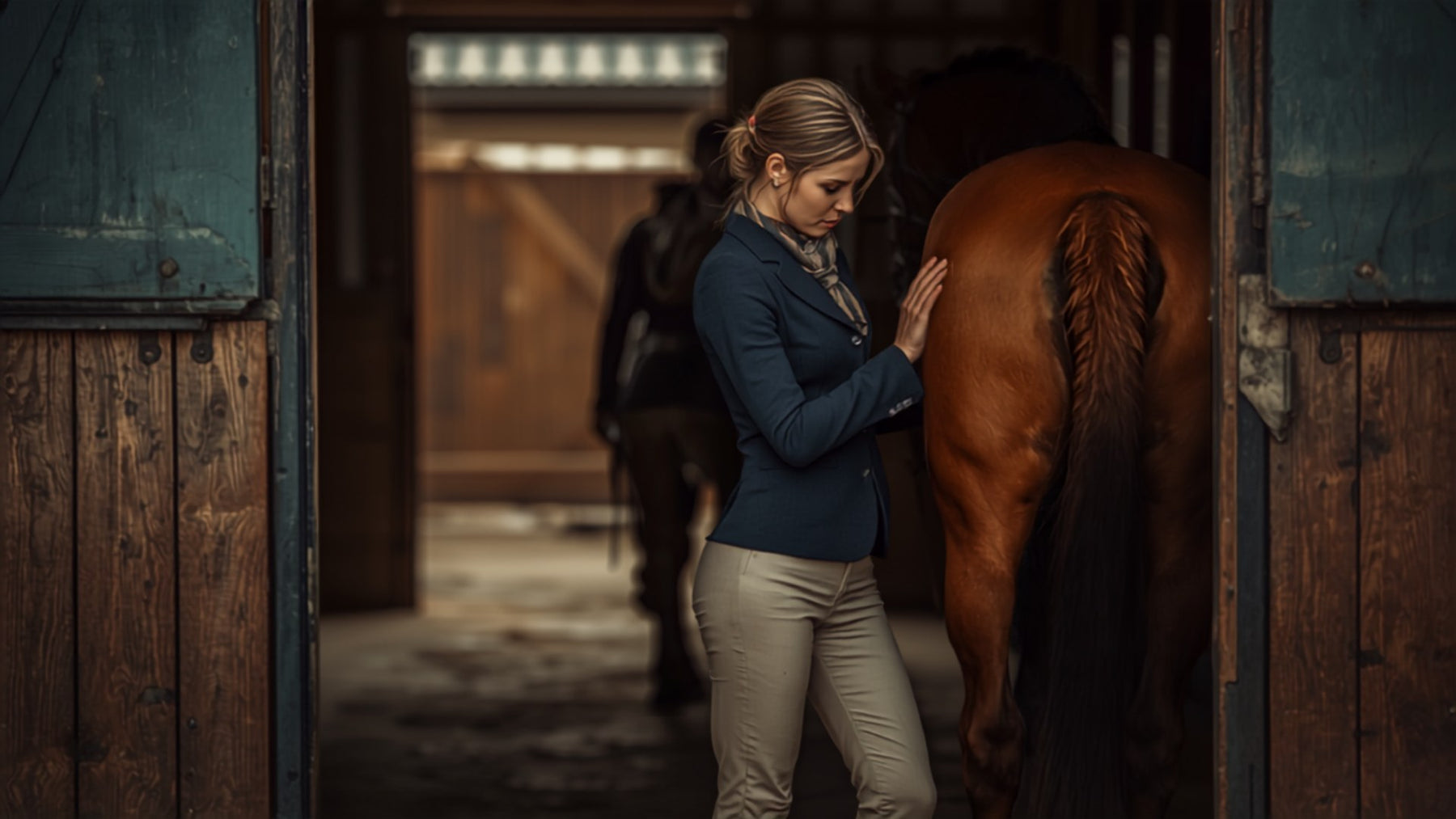
Some people ride for twenty years without buying a horse because they understand what it means. Others buy the first horse they see online after a year of lessons. The first group can be too cautious. The second may find themselves a year later with the wrong horse in a yard they cannot afford. This checklist is for everyone in between: people who take the dream seriously enough to look at it honestly.
Before buying: four questions to ask yourself
1. Can I afford it, even when something goes wrong?
The purchase price is the smallest item. A leisure horse realistically costs 450 to 900 euros a month for livery, farrier, vet, insurance, feed and equipment, and over 1.000 near a city. Add an emergency fund of at least 3.000 euros or surgery insurance, because colic surgery costs 5.000 to 10.000 euros. If your budget cannot support that for ten years, the time is not right yet.
2. Do I have the time?
A horse needs you six to seven days a week, for at least an hour and a half per visit, plus travelling time. Holidays, illness, exam periods: who steps in? No horse without a backup plan.
3. Can I ride and handle a horse well enough?
Honestly: can you tack up alone, ride safely in every gait, stay in control out hacking and lead a horse that spooks? If not, a horse share for one to two years is better preparation. It costs 100 to 250 euros a month and teaches what riding lessons do not: everyday life with a horse.
4. What do I want to do with the horse?
Hacking and trail riding, dressage, jumping, groundwork or simply spending time at the yard? The answer determines breed, age, training and price. “A bit of anything” is not enough to buy on.
The search
- The right horse for beginners is older. Eight to fifteen years old, well trained, steady-nerved, experienced. A young horse for a beginner is the classic mismatch: two who don't know.
- Check the seller. With every seller, pay attention to how much of the horse's history they can document, for example with photos, paperwork and training records covering several years. With dealers: the warranty is a legal right, use it.
- Learn to read adverts. “Needs an experienced hand” means difficult. “Not a beginner's horse” means what it says. “Healthy, no previous conditions” without paperwork means nothing.
- Take someone with you. A trainer, an experienced rider, someone who isn't in love. Always.
The trial ride
Ride at least twice, on different days, ideally turning up early without notice once. See the horse in the stable, being groomed, tacked up and led, in the arena and out hacking. The seller rides first, then you. Watch how the horse behaves during mounting, around other horses, alone outside and when loading. There is a reason if a horse is only demonstrated and you are never allowed to be alone with it.
The pre-purchase veterinary examination
Always. Without exception. By a vet you choose, not the seller. The small pre-purchase examination (clinical examination, flexion tests, heart, eyes, lungs) costs 150 to 300 euros. The full pre-purchase examination with X-rays of the legs costs 500 to 1,200 euros. You agree in advance with your vet how many views will be taken. The X-ray guideline of the Gesellschaft für Pferdemedizin (GPM), valid since 1 April 2026, gives orientation: for sound warmbloods aged three and over it provides for 22 standard views, with deviations agreed separately. For a more expensive horse or with competition ambitions, the full examination is strongly recommended. It is not required by law. Ask for the images and keep them. And: a pre-purchase examination is a snapshot, not a guarantee. But it prevents the biggest bad buys.
The contract
- Always in writing, even between friends.
- Name, life number, equine passport number, age, sex, colour and markings.
- Purchase price, payment method, handover date and transfer of risk.
- Explicit details of known previous illnesses and vices, such as crib-biting, weaving or rearing.
- The vetting result as an appendix.
- With dealers, accept no exclusions of statutory warranty rights: these are ineffective against consumers.
- Equine passport and ownership certificate at handover; otherwise no payment.
The first weeks
A new horse needs four to eight weeks to settle in. It will be different from the trial ride, often less sure of itself. No competition, no hack out alone in the first week. Routine, calm, groundwork, trust. Stable place secured beforehand, insurance from day one (horse liability insurance: not required by law but strongly recommended, and check whether your livery contract requires it; surgery insurance is also worthwhile), farrier and vet informed.

The most honest question, finally
Would you still buy this horse without the coat and mane you fell in love with? If yes, because temperament, training, health and price all fit, this is your horse. And we understand why that first photo of the two of you will eventually deserve a place on the wall.
And when that moment comes: a horse fills a wall. Under Horse portraits you will find large formats on framed canvas for the living room wall and smaller posters for the hallway or stable. How to get the right photo for it is explained in Photographing horses.
If the new horse needs a new name, our horse name finder sorts over 450 ideas by style and length.
For children excited about the new horse, there is our horse colouring book for children. Find all our books on our books page (book in German).
Further reading
- What a Haflinger costs each month: a breed that forgives a lot
- Photographing horses: for the first photo afterwards
- Give a pet portrait as a gift: and for the moment you want to keep


